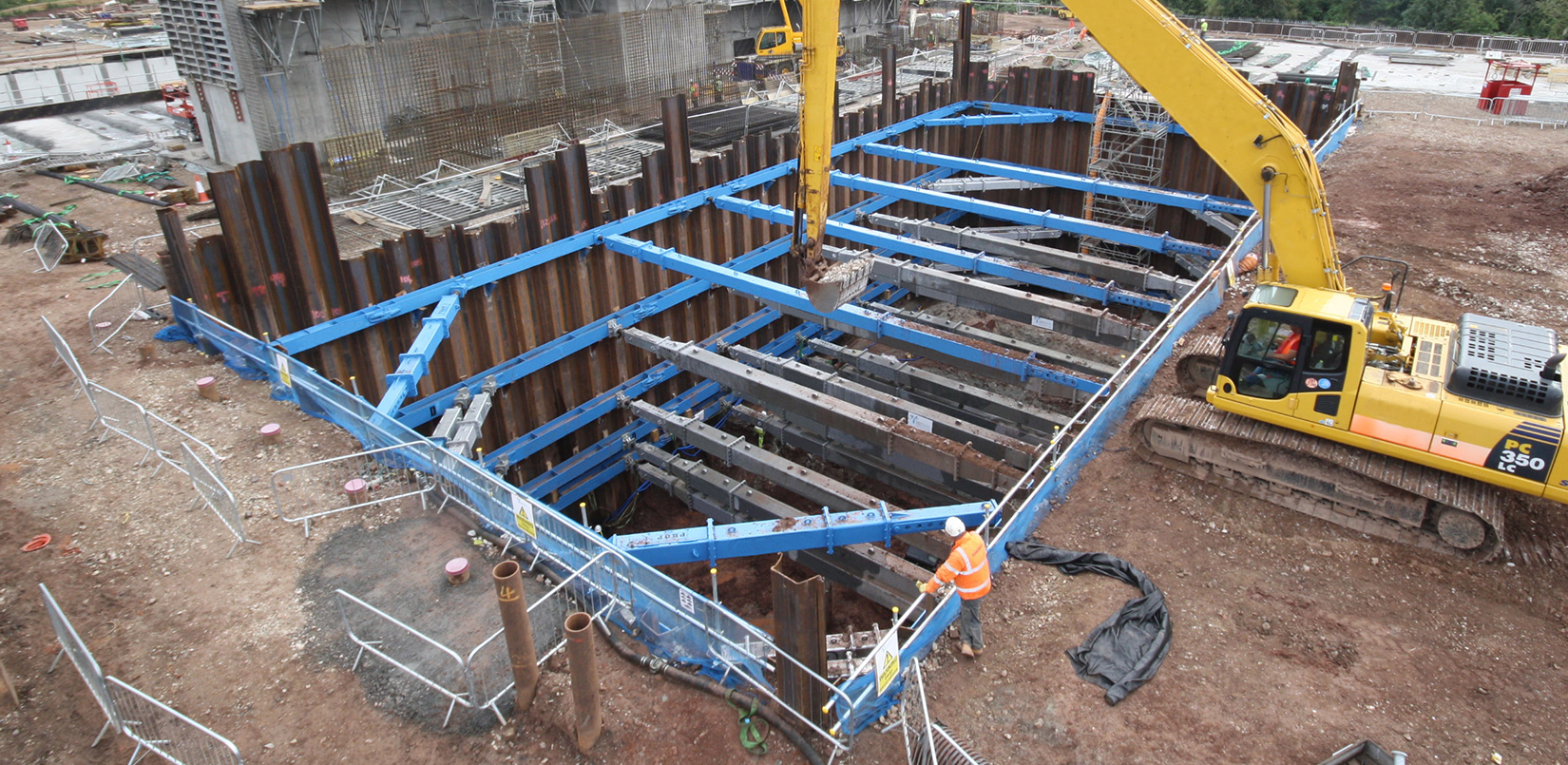
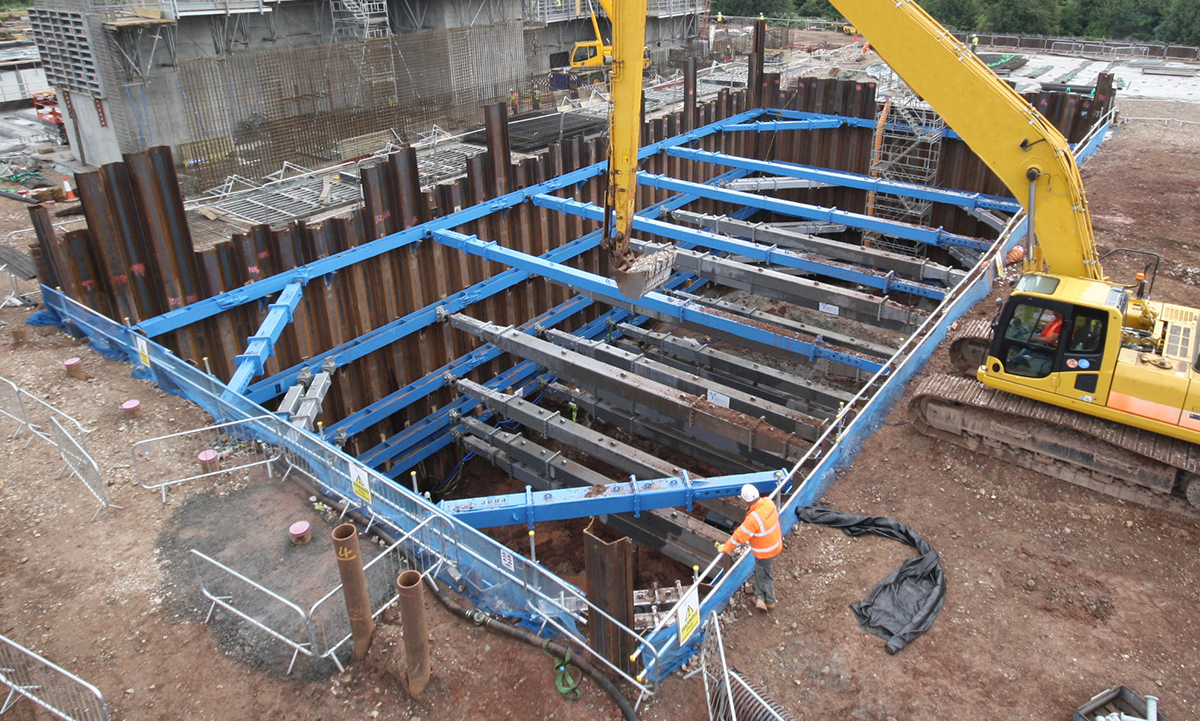
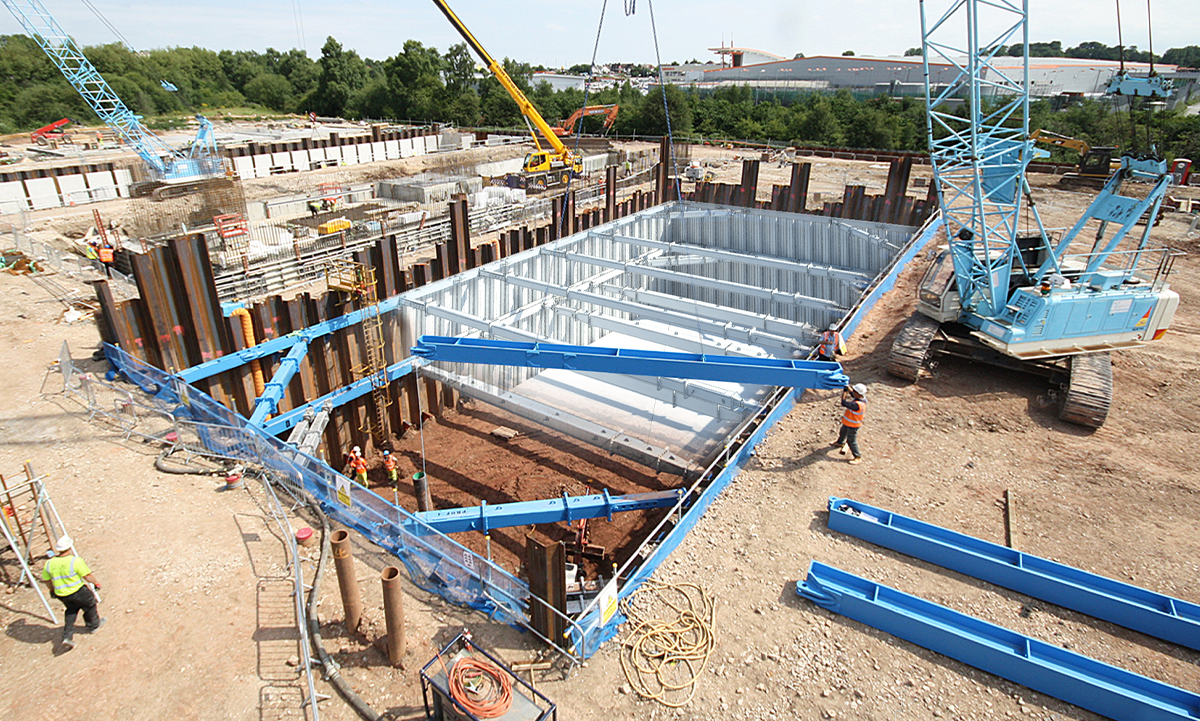
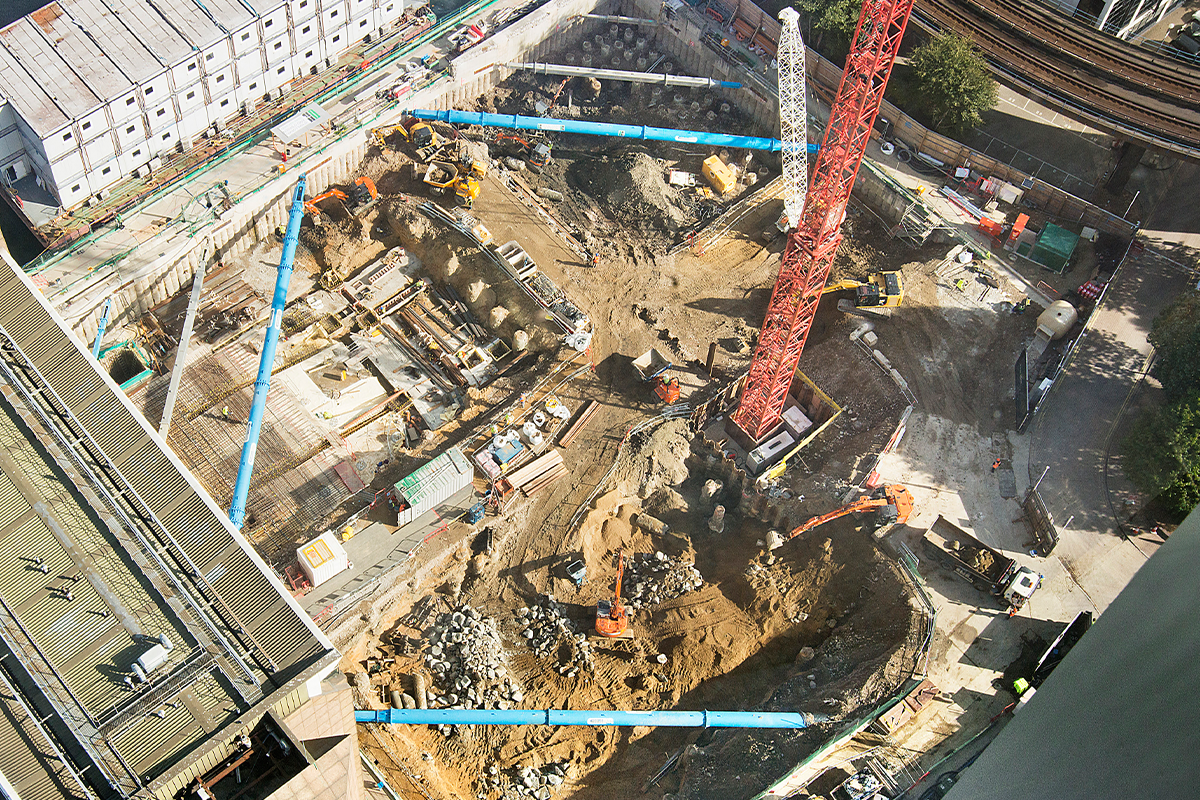
Sheet piles were installed to 19m depth, forming the perimeter of a substantial concrete bunker measuring 32.7m by 12.7m, with wall thicknesses up to 1200mm and a base thickness of 1800mm.
Digital engineering expertise brings waste facility project to life
Derbyshire Waste Plant, Derby
Project Overview
| Location |
|
|---|---|
| Sector | Power & Energy |
| Products |
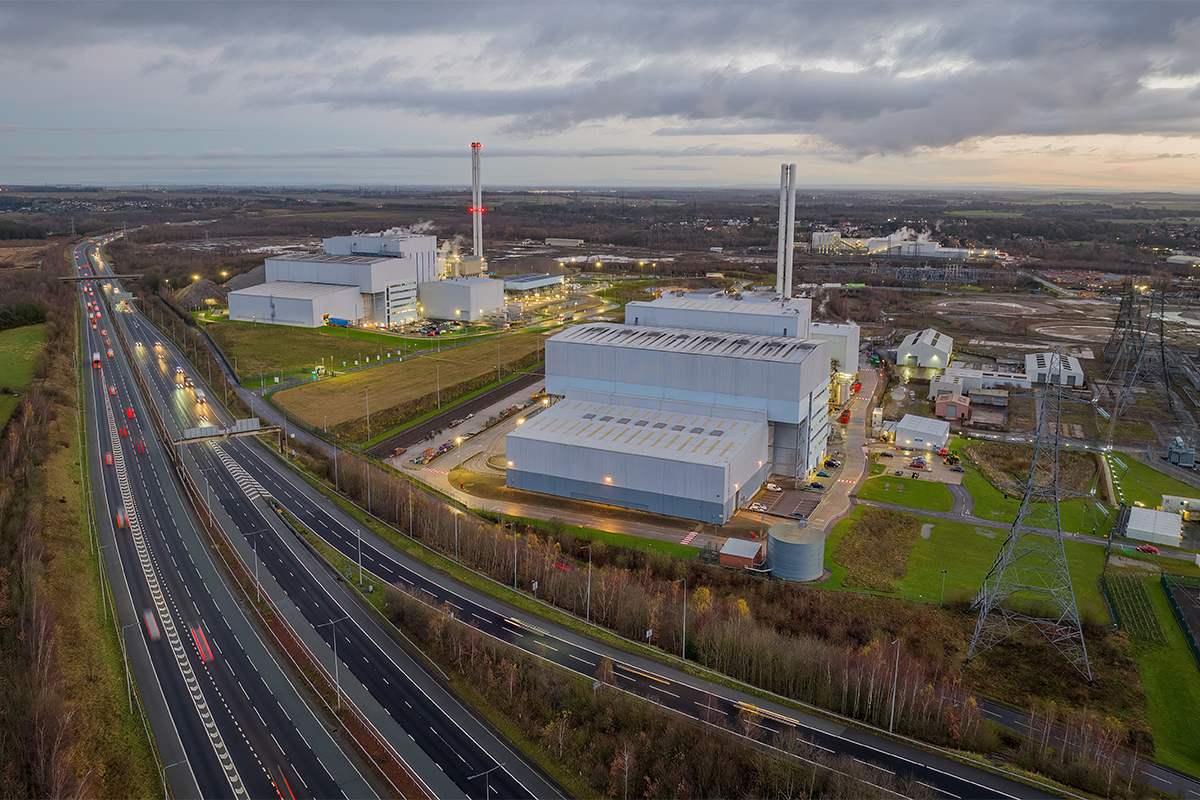
Derby Waste is a Mechanical Biological Treatment (MBT) facility with an on-site gasification plant. The facility diverts up to 98% of residents’ residual waste, while also generating enough electricity to power 14,000 homes.
Our solution
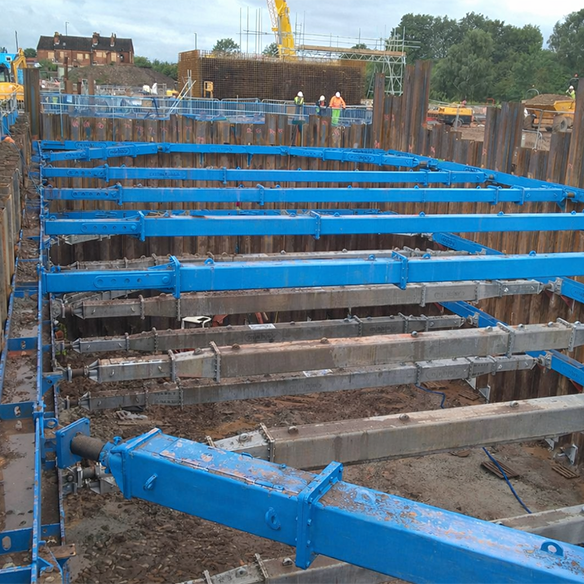
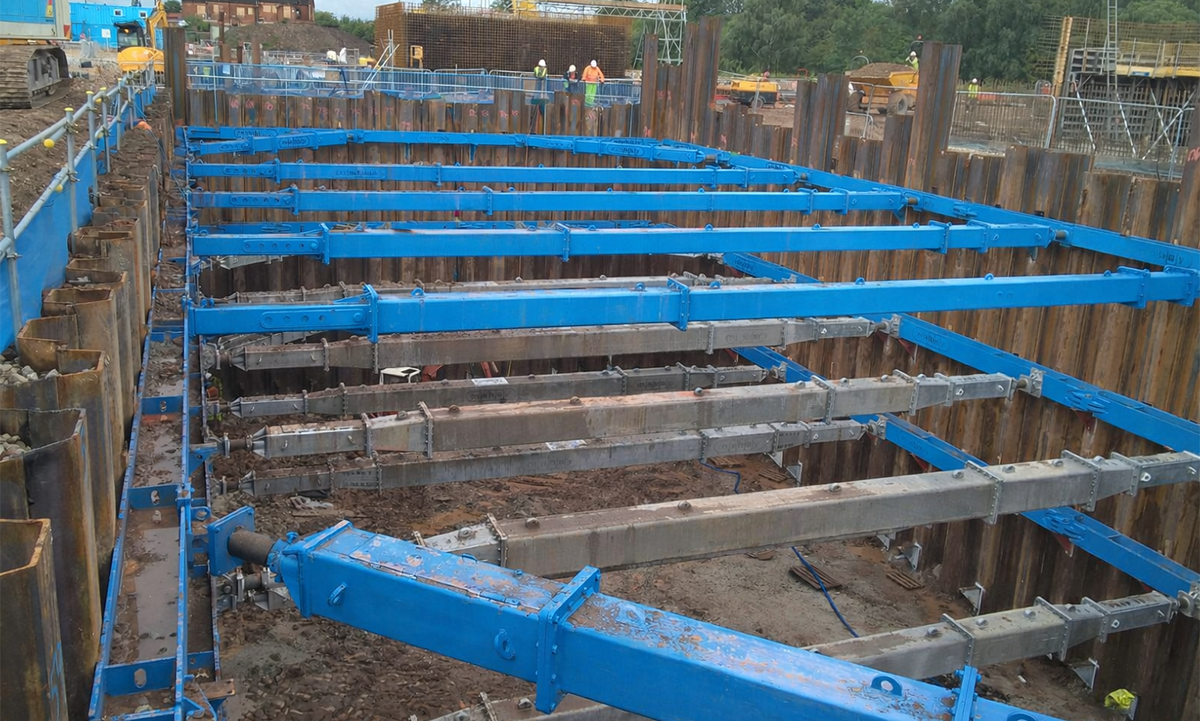
Five levels of frames were required to support this significantly deep excavation. The top frame used Super Shaftbrace and Super Bracing Struts with 400mm extensions. The four remaining frames used Supershaft Plus and Super Bracing Struts with 600mm extensions. Overall, a total of 450t of groundworks equipment was used to support the excavation.
There was geotechnical variability across the excavation, as it was partly located in a backfilled Tannery settlement pond. Consequently there was variability between boreholes and differences in groundworks levels.
Learn more about our groundworks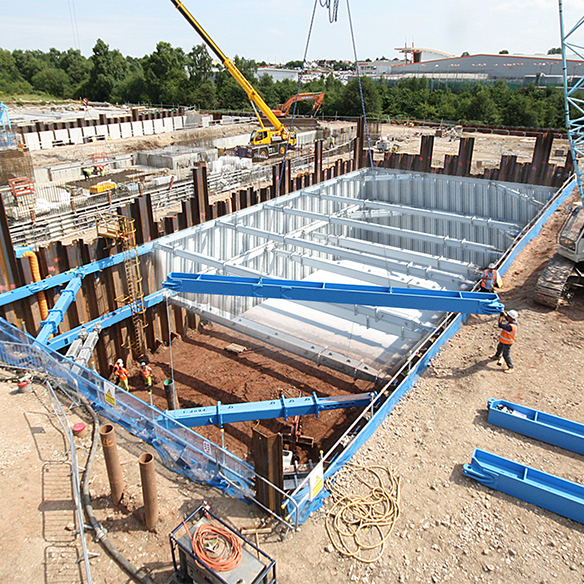
In addition, construction sequencing was critical as wall lifts had to be poured in two 6m high lifts. Our design allowed the three lower frames to be removed after the base was cast against sheets, acting as a strut. This allowed the first wall lift to be poured without any framing obstructing the shutters. The excavation could then be backfilled to this level, allowing the upper two levels of frames to be removed, and the sheets to stand in cantilever, again with no obstruction.
To aid the planning of the construction sequencing, our Digital Engineering team provided Interserve with a Revit model of the excavation, with project phases created. This allowed the site teams to visualise the complex installation and removal sequence of the support frames around the excavation, concrete construction and finally the backfill operations.
Project images
Related news and projects

Give us a call
For all project specific design and technical enquiries, please contact your local service team

Send us an email
If you want to talk to us about your project, send us an email and a brief outline of how we can help and we’ll be in touch
[email protected]
“We utilise BIM design in our procedures and Mabey Hire is BIM Level 2 compliant so fall in line with that. There were huge benefits in the visualisation including getting a feel for how the excavation would look and in particular, the sequencing of the scheme.
Various copies of Mabey Hire’s sequencing drawing were displayed around the site, aiding the health and safety by allowing site personnel to plan accordingly. It also highlighted possible construction constraints we could encounter on site. It brought questions from all levels of the site team that ordinarily may not have been raised.”