New circular tanks, approximately 25m in diameter, needed to be constructed within 10m of existing humus tanks. The tight proximity and scale ruled out traditional design approaches, requiring a carefully engineered solution.
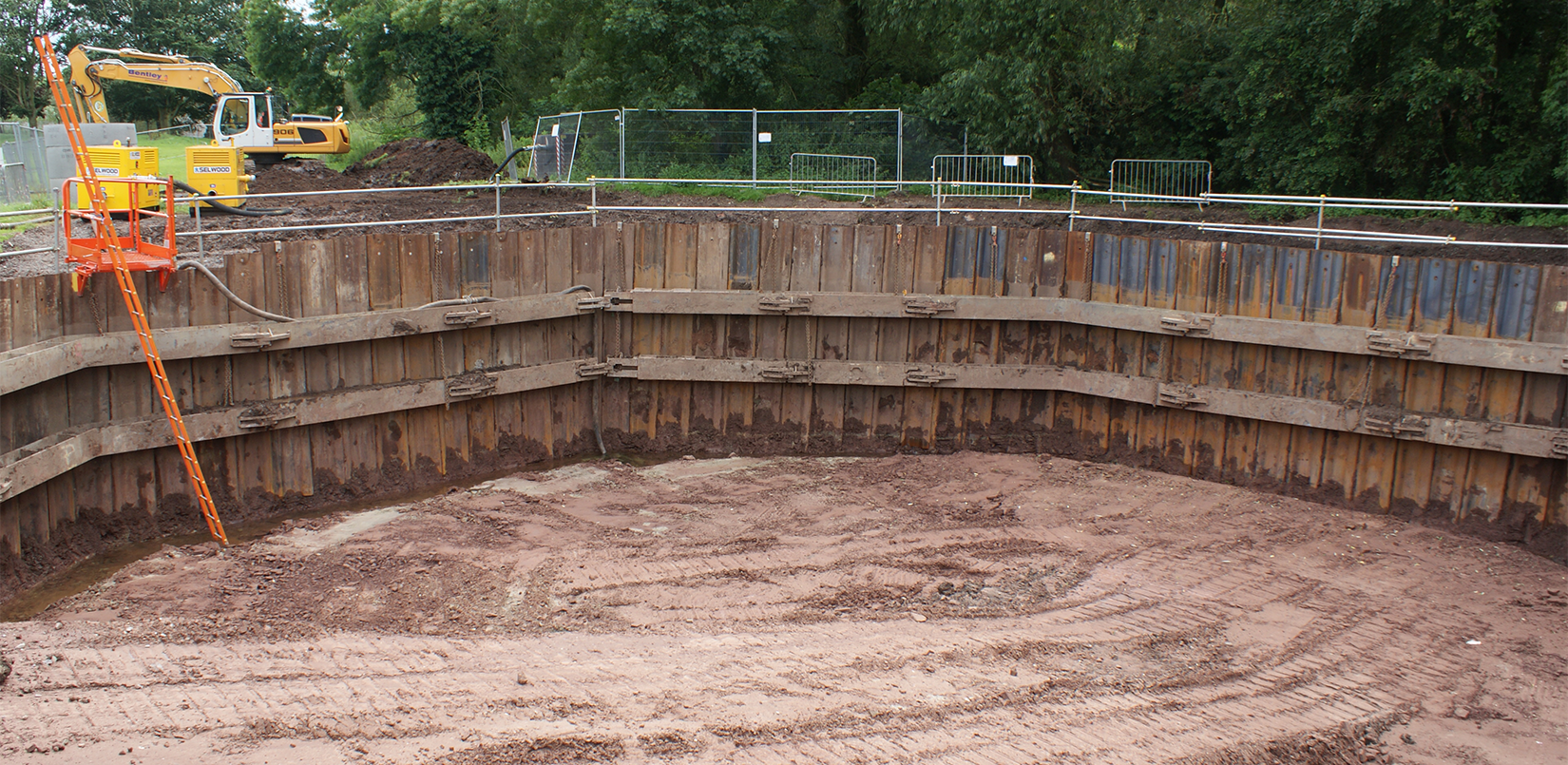
Octagonal ground support in waste waterworks
Coven Heath, Staffordshire
Project Overview
| Location |
|
|---|---|
| Sector | Water |
| Products |
The redevelopment of the Severn Trent Water waste waterworks at Coven Heath near Wolverhampton featured numerous challenges that would make the project less than straightforward.
Our solution
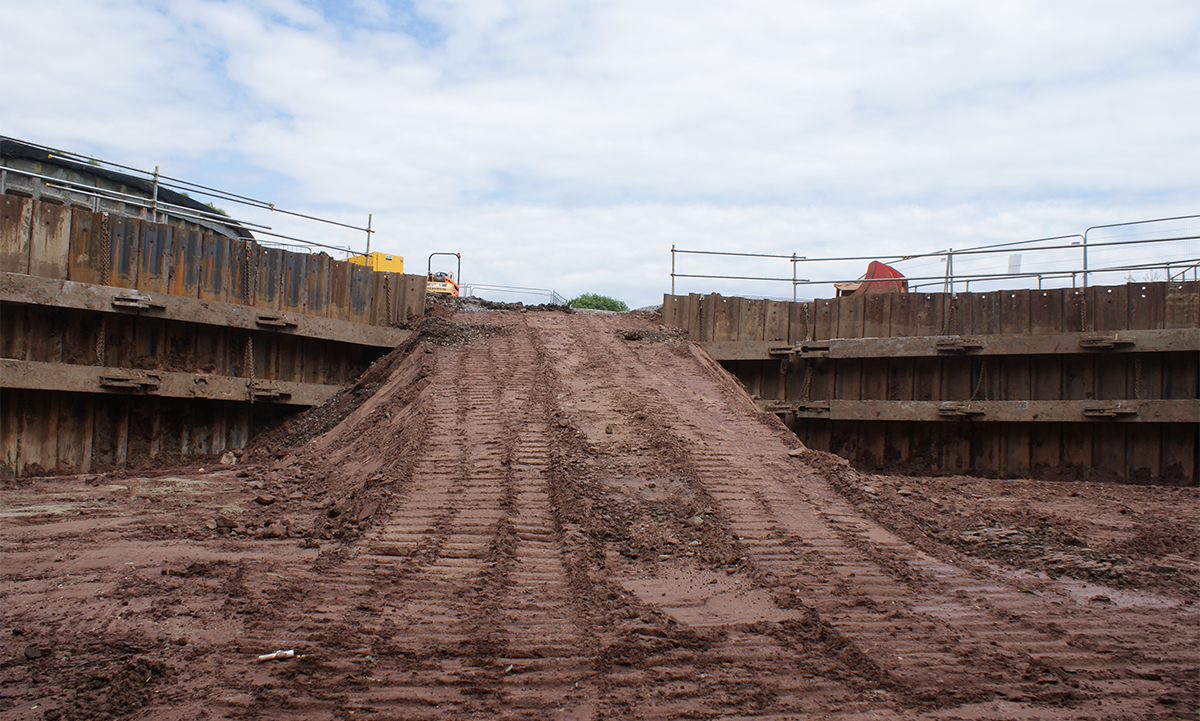
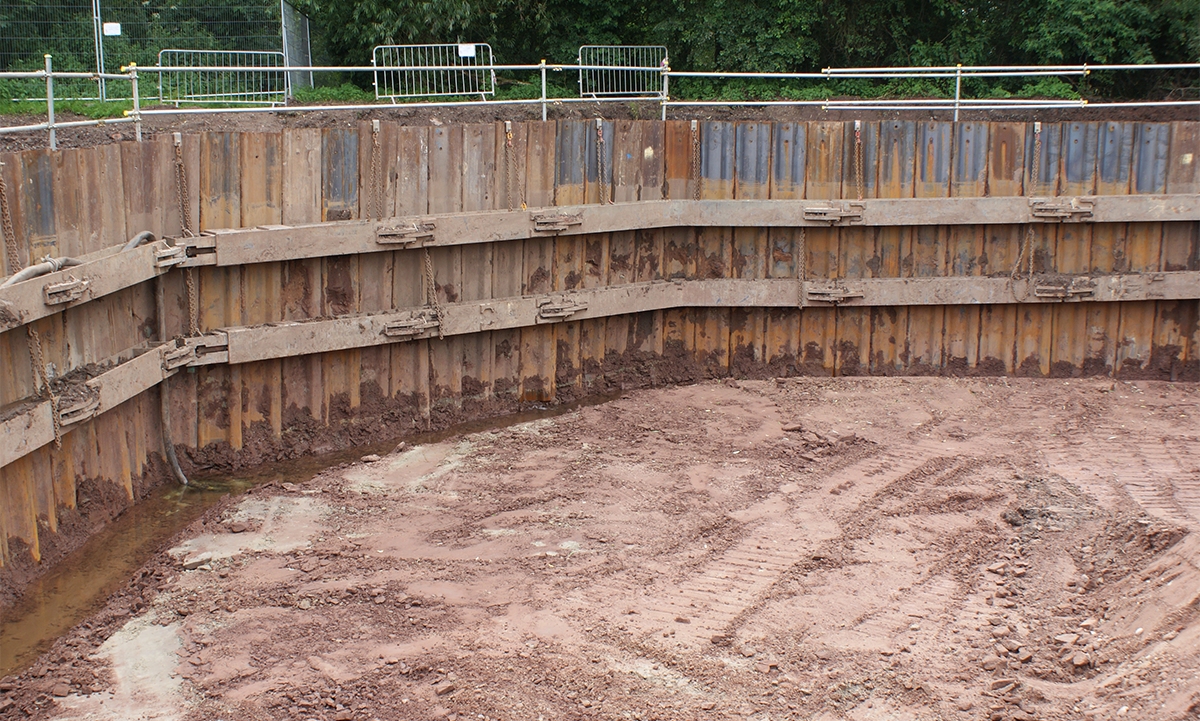
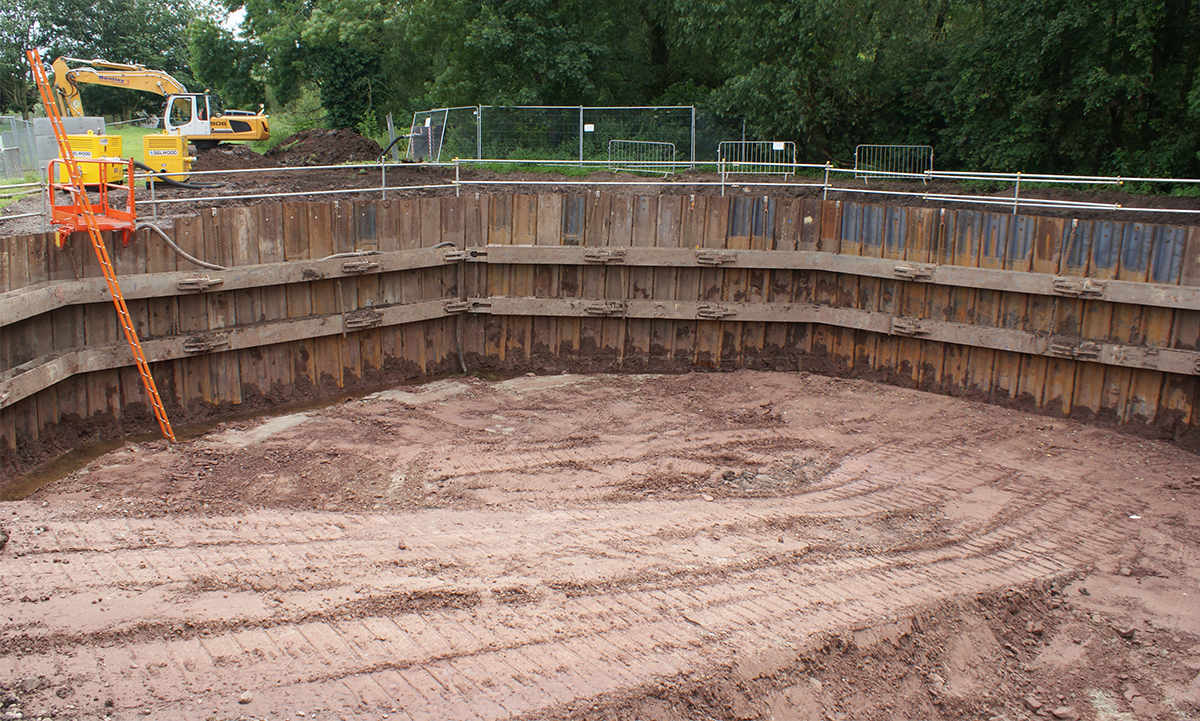
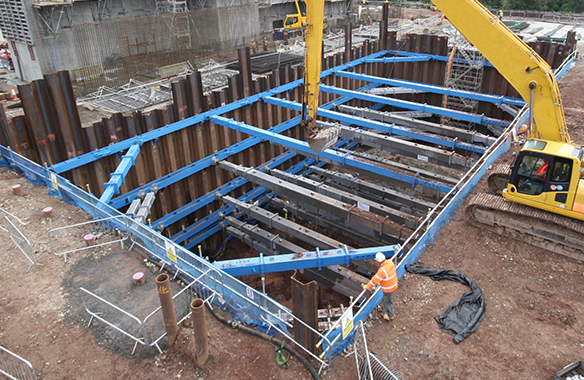
These extra conditions meant our engineers would have to come up with an unusual scheme to get around this obstacle. They created designs for an octagonal system using Super Shaftbrace legs – with 135 degree cranked corners – and 128 M12 overlapping trench sheets.
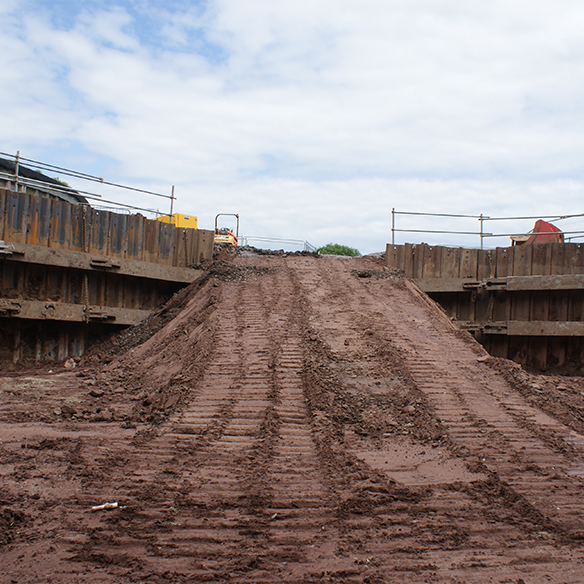
The sheets were installed via slit trench (long narrow trenches) to formation level, which allowed the excavation to be continued down to 1.25m below ground level.
Learn more about Supershaft Brace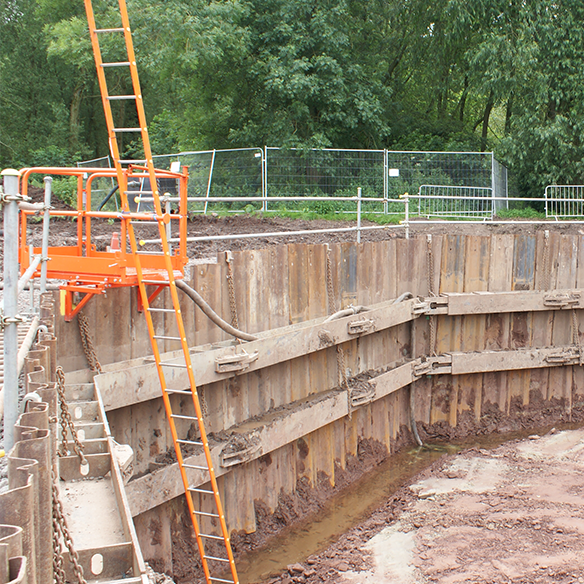
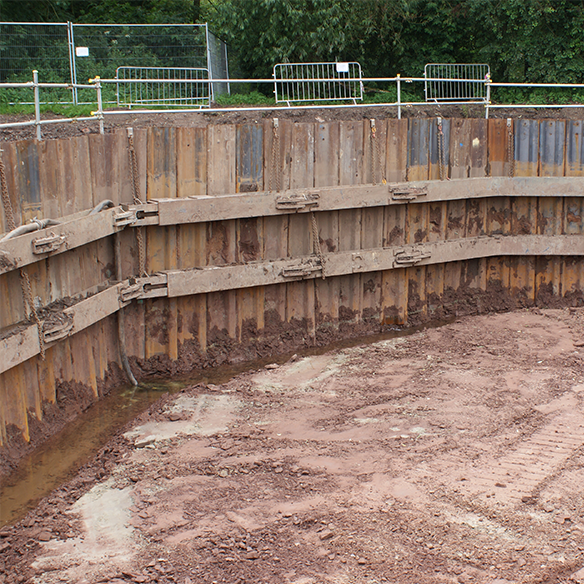
Once at this level the first frame of Super Shaftbrace was installed, 1m below ground. The excavation was then dug further, down to -2.5m, allowing the second frame to be installed at -2.3m. At this stage the excavation was continued to the toe-in of the sheet (-3.3m).
The excavation was then safe and ready for the next stage – the installation of the tanks.
Get in touchProject images
Related news and projects
- Project
- Morrisons Filling Station, Gloucester
Bespoke solution for new petrol filling tank
- Project
- Salisbury Square, London
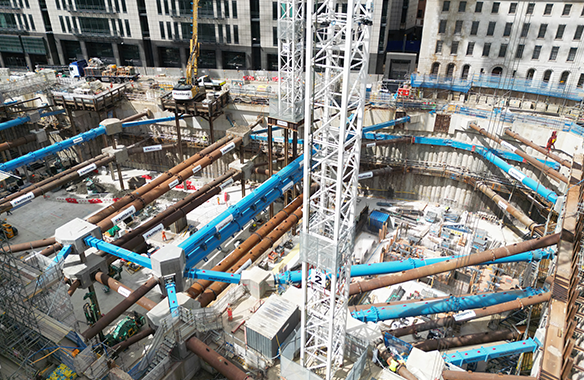
Building beneath London – temporary works innovation
- Project
- Derbyshire Waste Plant, Derby
Digital engineering expertise brings waste facility project to life
- Project
- Port of Tilbury, Essex
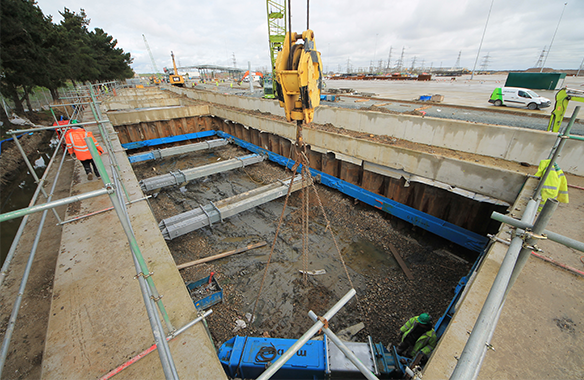
Flexible approach to engineering ensures safe and sustainable groundworks solution

Give us a call
For all project specific design and technical enquiries, please contact your local service team

Send us an email
If you want to talk to us about your project, send us an email and a brief outline of how we can help and we’ll be in touch
[email protected]