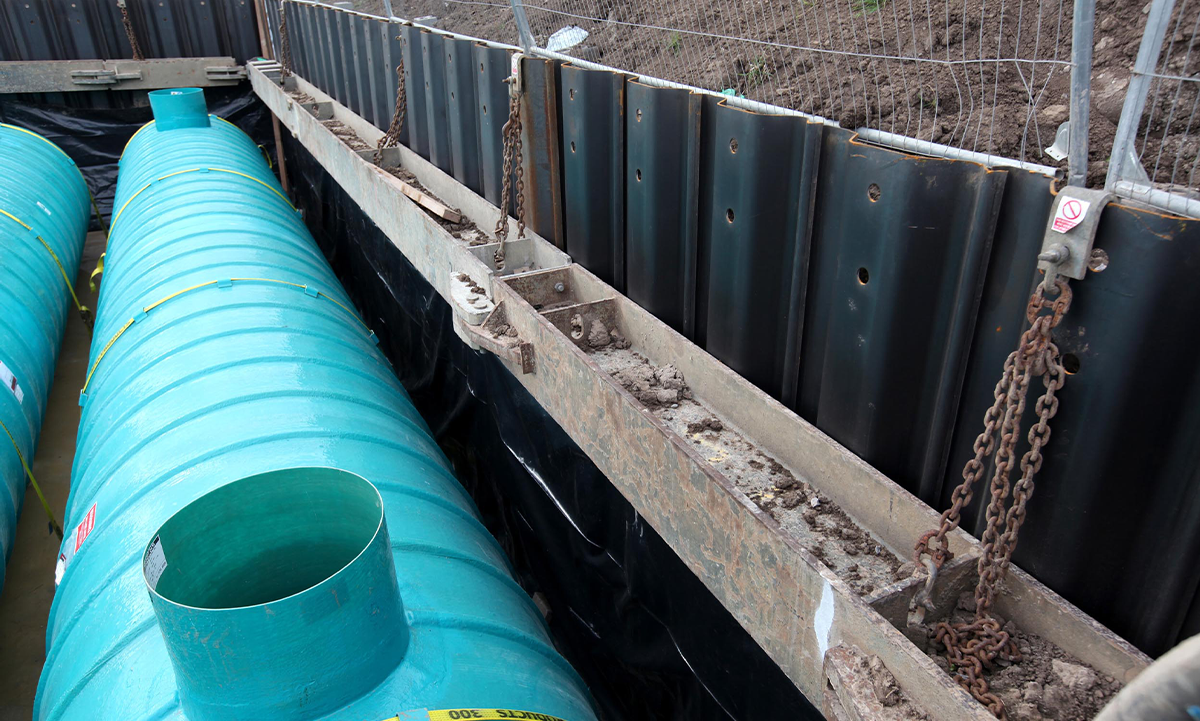
Accurate installation of the lapped sheets was critical to prevent groundwater ingress. With water levels at -2600mm in a 3400mm deep excavation, careful planning was essential to maintain base stability.
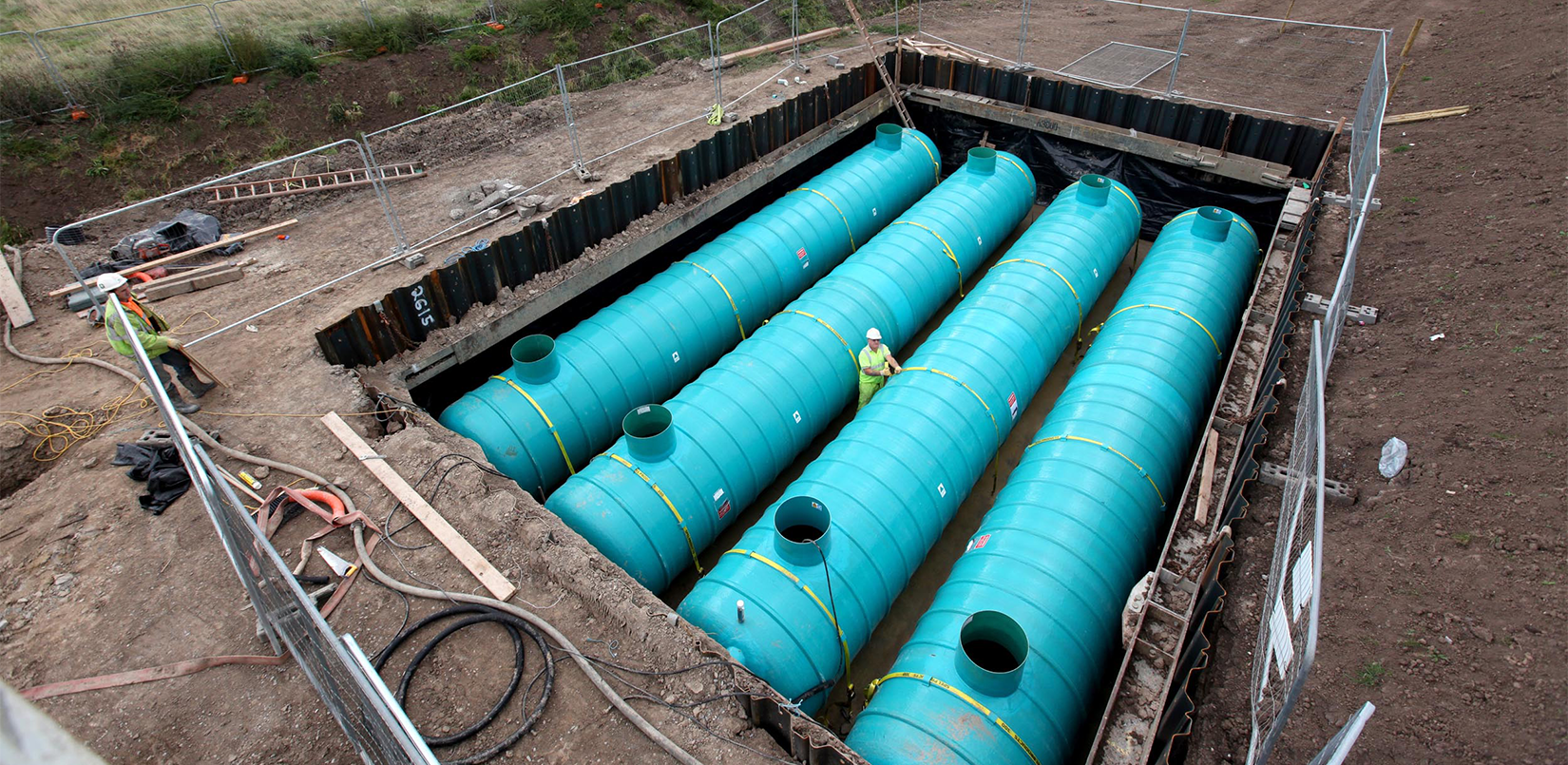
Supporting tank installation in difficult ground conditions
Horsey, Somerset
Project Overview
| Location |
|
|---|---|
| Sector | Power & Energy |
| Products |
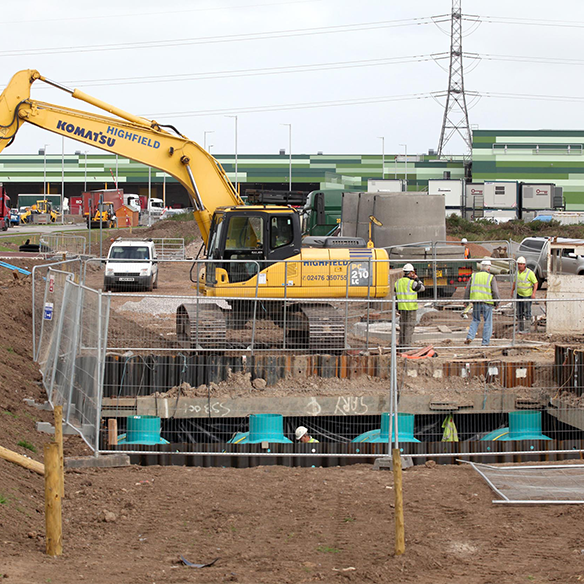
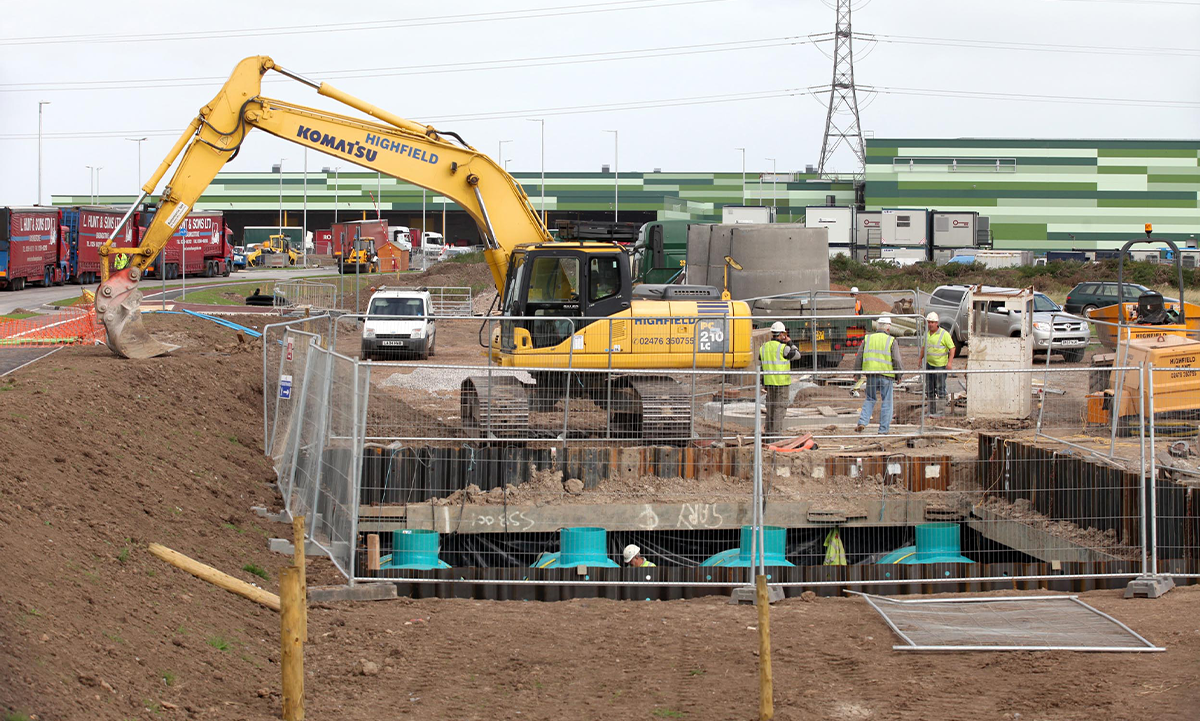
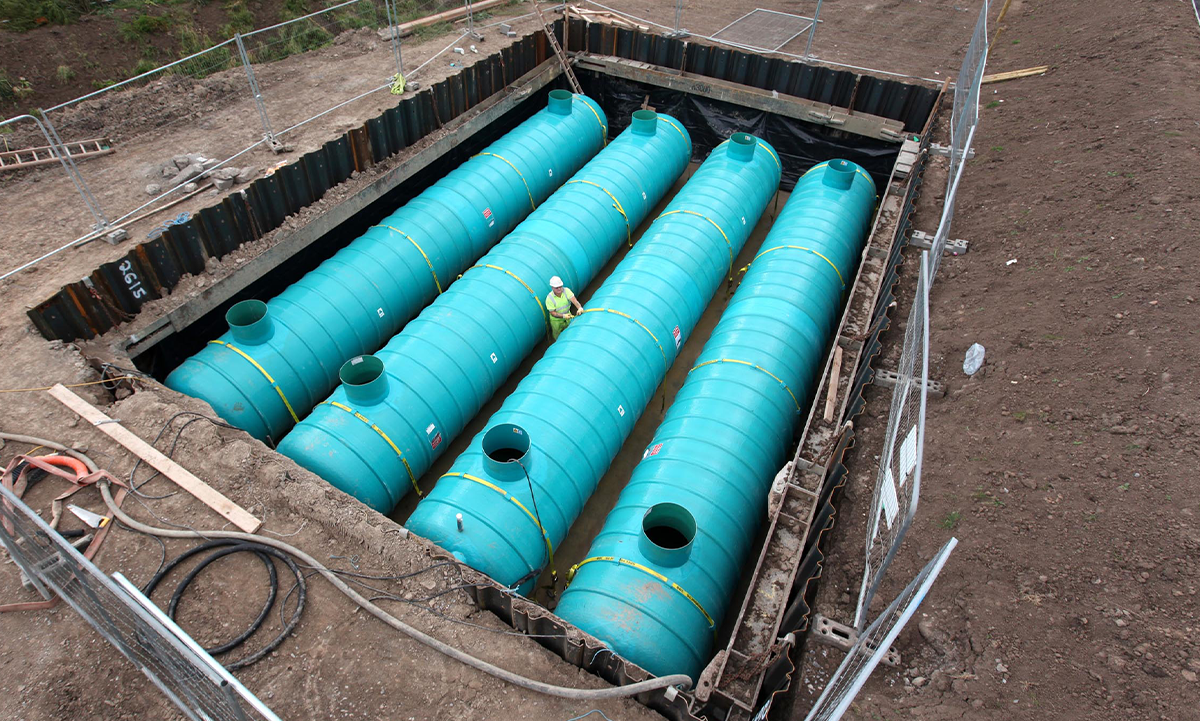
A tank installation at the Sydenham Farm development in Horsey, near Somerset was quite the challenge with bad ground providing an obstacle for developers.
We were contacted by subcontractor Highfield Tunnelling Ltd, acting on behalf of contractor John Sisk & Son Ltd, for our help on this six month-long project.
Our solution
Ninety M12 Overlapping Trench Sheets were driven into the ground first, with Mabey Hire engineers identifying the push and dig method as the best option.
The trench sheets were pushed into the ground with the toe-in depth of 3.4m required to combat the ground conditions.
Learn more about Super Shaftbrace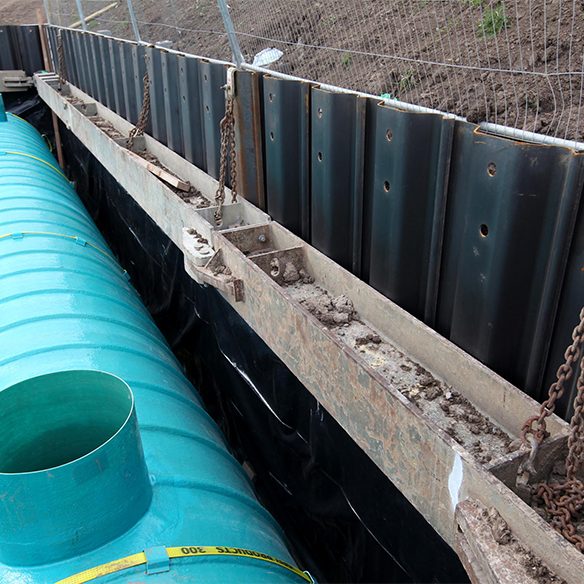
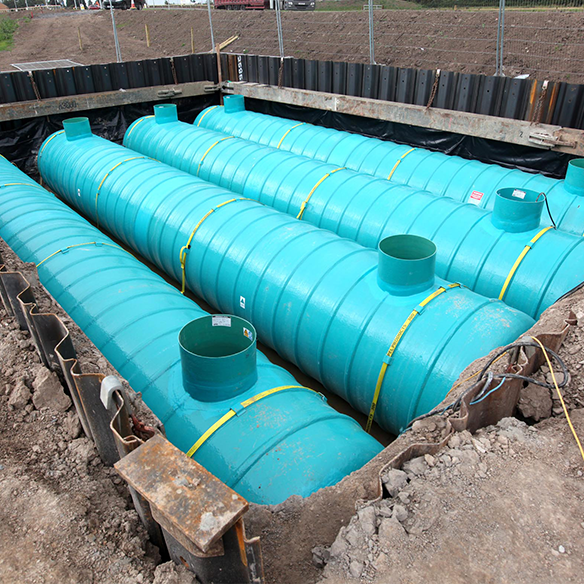
Excavations with the 45 tonne plant then began, first digging to 1m below the surface, allowing the first Super Shaftbrace to be installed at 0.75m and pressurised.
Excavations then continued down to 2.75m below the ground where the second frame could be installed and pressurised at 2.5m.
Get in touchProject images
Related news and projects
- Project
- Coven Heath, Staffordshire
Octagonal ground support in waste waterworks
- Project
- Morrisons Filling Station, Wisbech
Making light work of petrol tank installation
- Project
- Lincomb Fish Pass, Stourport-on-Severn
Groundworks solution supports Severn fish migration
- Project
- Horsey, Somerset
Supporting tank installation in difficult ground conditions

Give us a call
For all project specific design and technical enquiries, please contact your local service team

Send us an email
If you want to talk to us about your project, send us an email and a brief outline of how we can help and we’ll be in touch
[email protected]