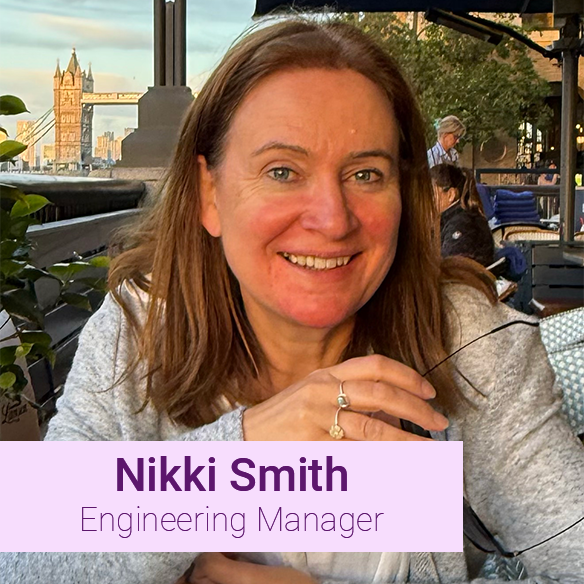
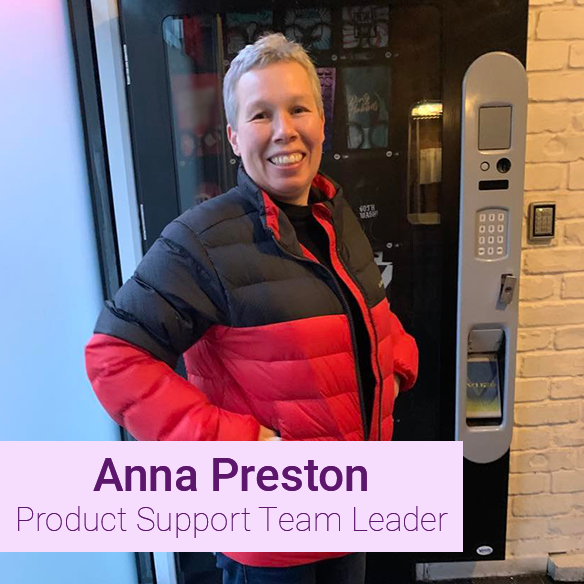
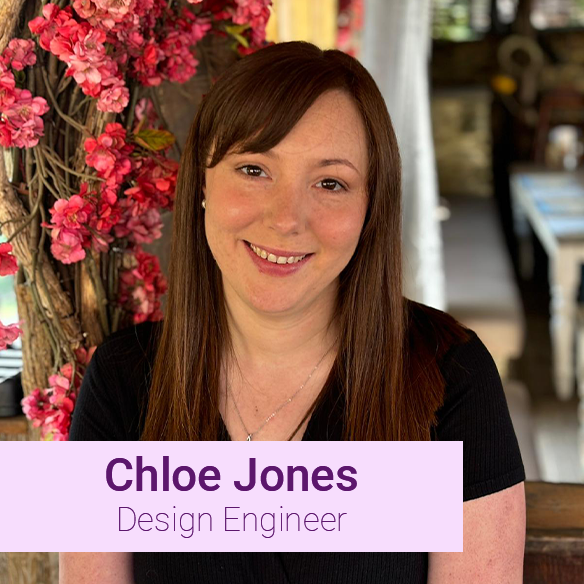
Another year celebrating International Women in Engineering Day! This time we were lucky enough to catch up with Nikki Smith, Engineering Manager for Regional Hire, Anna Preston, Product Support Team Leader and Chloe Jones, Design Engineer to talk all things engineering and industry progression. Read on in this exclusive Q&A to hear all about their experiences.
Celebrating women in engineering and inspiring the next generation
What attracted you into the world of engineering?
Nikki began, “I remember not really knowing what I wanted to do originally, when I looked at leaflets in the careers office and came across the construction sector. I knew I enjoyed problem solving and so found the prospect of the industry interesting.”
Anna told us, “Similarly to Nikki, I knew I enjoyed problem solving. Careers advisors suggested secretarial and office work (quite the stereotype!), which I knew definitely wasn’t my path, so my dad encouraged me to take a careers test. The results came back with engineering-based jobs. This made complete sense to me, as when I was three my parents found me on more than one occasion dismantling the family TV and fridge freezer, just to see how it all worked – the mechanics of it all fascinated me!”
“I didn’t take apart any TVs”, shared Chloe, “But I did share the same passion for problem solving as Nikki and Anna. My dad is a vehicle mechanic, so perhaps that is where it all began. I helped him on weekends with pulling engines apart and identifying the problems and developed quite an inquisitive mindset. I loved figuring out the clues, working out how to get to the end result and fixing the problem.”
How did you first break into the industry?
Nikki told us, “I completed a BTEC in Construction and then furthered my studies at university with a Civil Engineering degree. During my education, I must have been one of only three girls in both cohorts. Now I am an Engineering Manager for Regional Hire and have worked at Mabey Hire for 32 years.”
“I also completed a degree in Civil Engineering, and once graduated I became a full-time site engineer”, shared Anna. “I am now a Product Support Team Leader here at Mabey Hire, meaning I’m responsible for looking after any product issues, product development and technical literature.”
“I knew I didn’t want to go down a career route that’s stereotypical female, and I was already drawn to construction”, said Chloe. “I initially wanted to be an architect but was soon told I asked too many questions about the mechanics of everything, so instead I completed a BTEC National in Civil Engineering at 19. I then started on the hire desk at Mabey Hire and after returning from maternity leave in 2015, I asked to be transferred across to the engineering team. I am now a Design Engineer working full time whilst in my fourth year studying Civil Engineering at university.”
What is something you’re most proud of?
“I got chartered two years ago”, Nikki stated. “This is something I didn’t think I would be able to do, especially with temporary works being such a specialist area. It was a challenge, but I wanted to prove I could do it – I did it for myself!”
Anna said, “The same for me, getting chartered! That was a massive moment; I didn’t think becoming a chartered civil engineer was something I could achieve. I’d also have to say being a part of Mabey Hire’s STEM Programme is another highlight. I absolutely love the work, promoting engineering and encouraging the younger generation to consider it as a career path.”
“It has to be a project I worked on a couple of years ago,” Chloe said. “This project challenged and pushed me out of my comfort zone, forcing me to look at things differently. As an engineer, it’s easy to get imposter syndrome and doubt yourself. In many ways, I think this can make you a better engineer in the long-term, as you’re not overconfident.
So, seeing this project though to the end was a proud moment.
“On a more personal level, I am also very proud of myself for studying alongside my full-time role at Mabey Hire, all while juggling young family life. It is challenging but I’m always learning and feel really lucky to work as part of a team that support and inspire each other.”
What has been your experience as a woman in a primarily ‘male-dominated’ industry?
“Things have certainly improved since 1994,” Nikki laughed. “In my first job, customers would call up and assume I was the receptionist, not an engineer. Nowadays, there are a lot more women in the industry, which is great to see but there is still work to be done – it can still sometimes feel like women need to prove ourselves more than men.”
“I experienced similar assumptions when I first started out in the industry,” Anna admitted. “When I was a site engineer, I was the only woman. As well as having no on-site female toilet facilities, some of my colleagues even asked me to do their ironing – this just made me more determined to prove myself. Things have certainly improved a lot over the past 10 to 15 years, however, there is always more to be done.”
“Luckily, I have been privileged enough that women like Nikki and Anna have set a path for younger generations entering the industry,” Chloe said. “In my university class of roughly 60 students, around 15 are female, which is already a clear improvement from my BTEC National where the divide was greater.”
“There is still quite a lot of work to do, but perhaps it’s more around making engineering attractive to women. Careers in this industry can still be challenging for women, especially when you consider juggling childcare arrangements. I’m really lucky that Mabey Hire has been so supportive to me as a working mum, but more needs to be done to make this accessible to everyone. I don’t want people to miss out on something that they could excel at.”
What advice would you give to a young woman considering engineering as a career?
“There is so much to civil engineering, so many different aspects,” shared Nikki. “It’s an exciting prospect and I want the younger generation to know they can explore such a wide range of jobs.”
Anna agreed, “It is such a diverse career. It can involve both indoor and outdoor work, as well as a multitude of skillsets from drawing and calculations to more physical work. If you are a creative individual and love problem solving, you will enjoy civil engineering.”
“I would encourage real site experience; there is only so much a classroom can teach you.” Chloe suggested, “Develop your skills with more practical experience – real learning happens out on site. If I could speak to my younger self, I would tell her to not question herself, believe in herself and you can succeed. Step into your career journey with an open mind.”