Environmental monitoring has become an integral part of modern construction and infrastructure projects. As regulatory requirements increase and projects face greater scrutiny from clients, stakeholders and local communities, monitoring plays an important role in helping teams understand site conditions, manage environmental impacts and demonstrate compliance.
Yet when environmental monitoring is discussed, the focus often falls on the technology itself. Conversations tend to centre on sensors: what they measure, how accurate they are and who manufactures them. While technology is undoubtedly important, we know that successful monitoring depends on far more than the hardware deployed on site. Data management, reporting, engineering expertise and ongoing support all play a critical role in ensuring monitoring systems deliver meaningful insight throughout a project’s lifecycle.
This shift in focus is driving greater demand for integrated monitoring services that combine technology with specialist support. The goal is no longer simply to collect data, but to help project teams make informed decisions.
Recognising this evolution, we developed Enviroguard, our managed environmental monitoring service that combines monitoring technology, real-time reporting and engineering expertise within a single solution.
Bringing monitoring together
Modern construction projects often need to monitor a wide range of environmental parameters, including noise, vibration, dust, weather conditions, water quality and volatile organic compounds (VOCs).
Historically, these requirements have often been managed through separate systems, each generating its own data and reports. As projects become more complex, we’re seeing increasing value in bringing monitoring activities together.
That’s why we designed Enviroguard to provide a more joined-up approach. As a modular monitoring solution, it enables multiple environmental parameters to be monitored through a single platform, creating a central source of information that can evolve alongside project requirements.
Turning data into insight
Collecting data is only one part of effective environmental monitoring. The real value lies in making that information accessible, understandable and actionable.
Project teams increasingly require real-time visibility of site conditions to support decision-making, respond to emerging issues and provide assurance to stakeholders. This has accelerated the adoption of digital platforms that bring monitoring information together and present it in a clear, meaningful way.
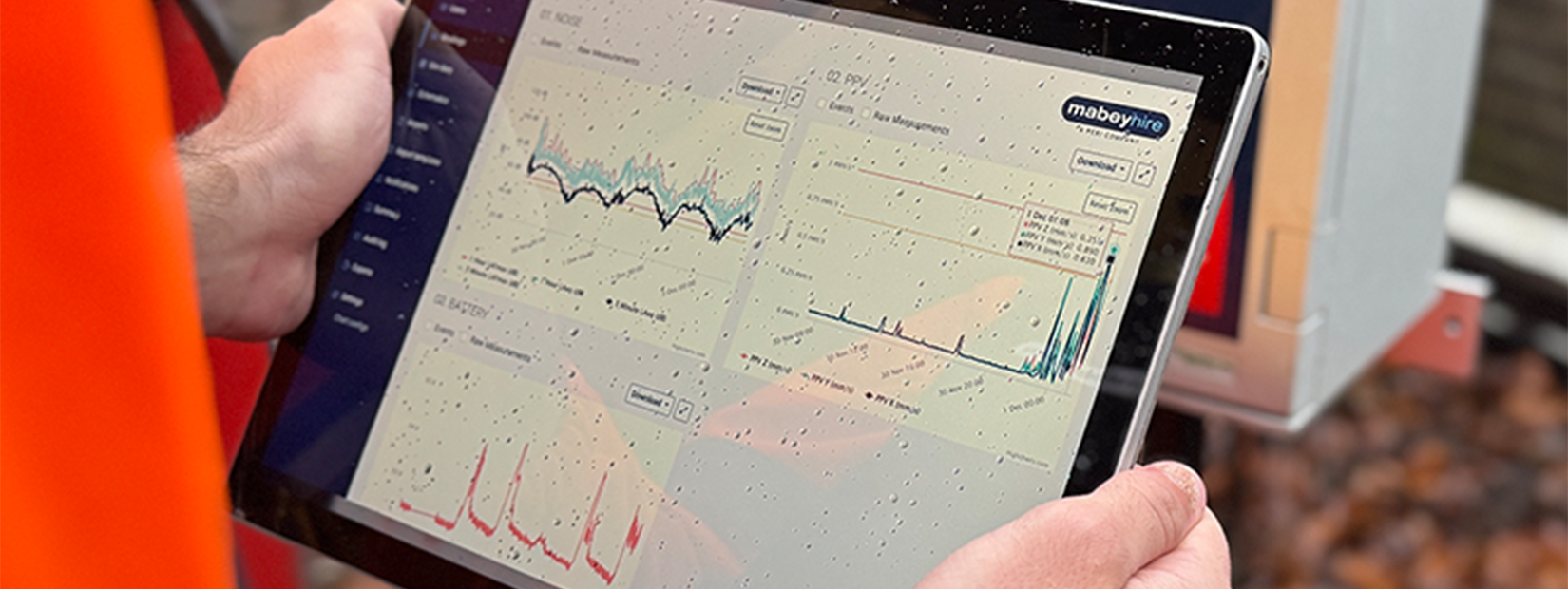
With Enviroguard, monitoring data is transmitted directly to our Insite portal, providing users with 24/7 access to live information, automated alerts and project-specific reporting. Whether we’re supporting a single monitoring location or a larger infrastructure project, the platform enables environmental and structural monitoring data to be viewed in one place, with dashboards configured to suit different users and stakeholder requirements.
The importance of ongoing support
Technology may provide the data, but effective monitoring also relies on the expertise behind the system. Monitoring equipment needs to be installed, configured and maintained throughout the duration of a project. Trigger levels must be established, reporting requirements managed and system performance monitored to ensure reliable information continues to be collected.
For many project teams, these responsibilities sit alongside a wide range of other operational demands. As a result, we’re seeing growing recognition of the value of managed monitoring services that combine technology with specialist support.
Our Enviroguard service is supported by a dedicated team of monitoring engineers who remain involved throughout the project lifecycle. This can include supporting monitoring strategies during Early Contractor Involvement (ECI), assisting with installation and commissioning, and providing ongoing technical support as projects progress.
For us, this ongoing involvement is important. It helps ensure monitoring remains an active, managed process rather than simply a collection of sensors operating in the background.
Designed for changing site conditions
Construction projects are rarely static. Site layouts change, works progress and monitoring requirements can evolve throughout delivery. Flexibility is therefore an important consideration when selecting a monitoring solution. Systems need to be capable of adapting as projects develop without creating unnecessary disruption or complexity.
We designed Enviroguard as a scalable solution, capable of supporting both individual monitoring locations and larger monitoring networks across complex projects. Where permanent infrastructure may not be practical, we also offer Portable Enviroguard. Providing the same real-time monitoring capability in a compact, self-contained unit, it can be deployed rapidly for temporary works, short-term investigations and remote monitoring locations.
Looking beyond the hardware
Environmental monitoring technology will continue to advance, with sensors becoming increasingly sophisticated and connected. However, from our experience, the success of a monitoring programme is determined by more than the equipment deployed on site.
The ability to manage data effectively, provide meaningful reporting and support project teams with specialist expertise is becoming just as important as the technology itself. As environmental responsibilities continue to grow, we believe the focus needs to shift from monitoring equipment alone to the services and expertise that surround it.
That’s the approach we’ve taken with Enviroguard, bringing together proven monitoring technology, digital reporting and engineering support within a single managed service. Because in today’s construction environment, effective environmental monitoring requires more than technology alone.