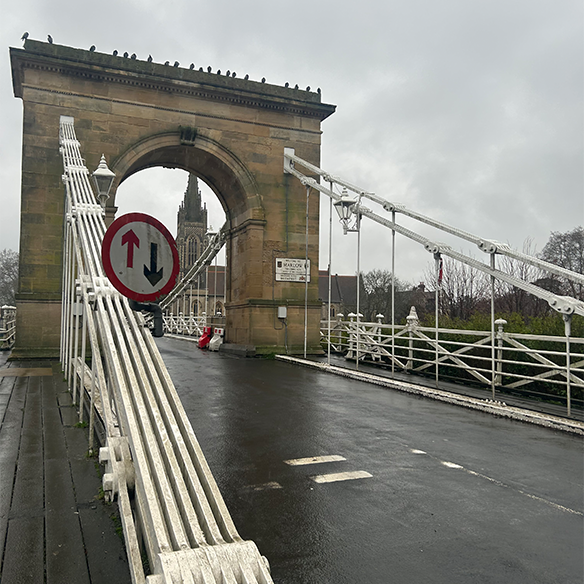
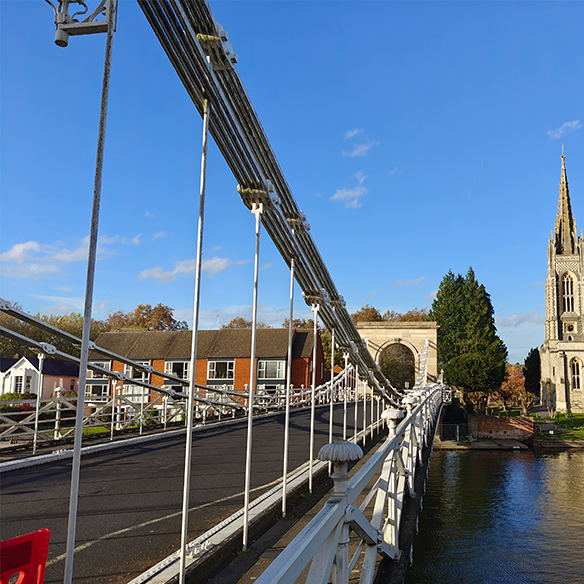
Complex support delivered for bridge restoration

mabey-hire-marlow-bridge-584x584-1
Location
Sector Highways
Application
Products

Adverse weather conditions and the need to maintain traffic flow across a 19th century Grade I listed suspension bridge were among the key challenges when providing the temporary propping and real-time monitoring package for this high profile Buckinghamshire Highways scheme.

The challenge

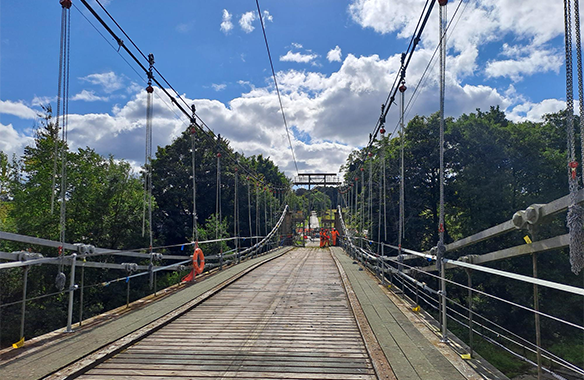
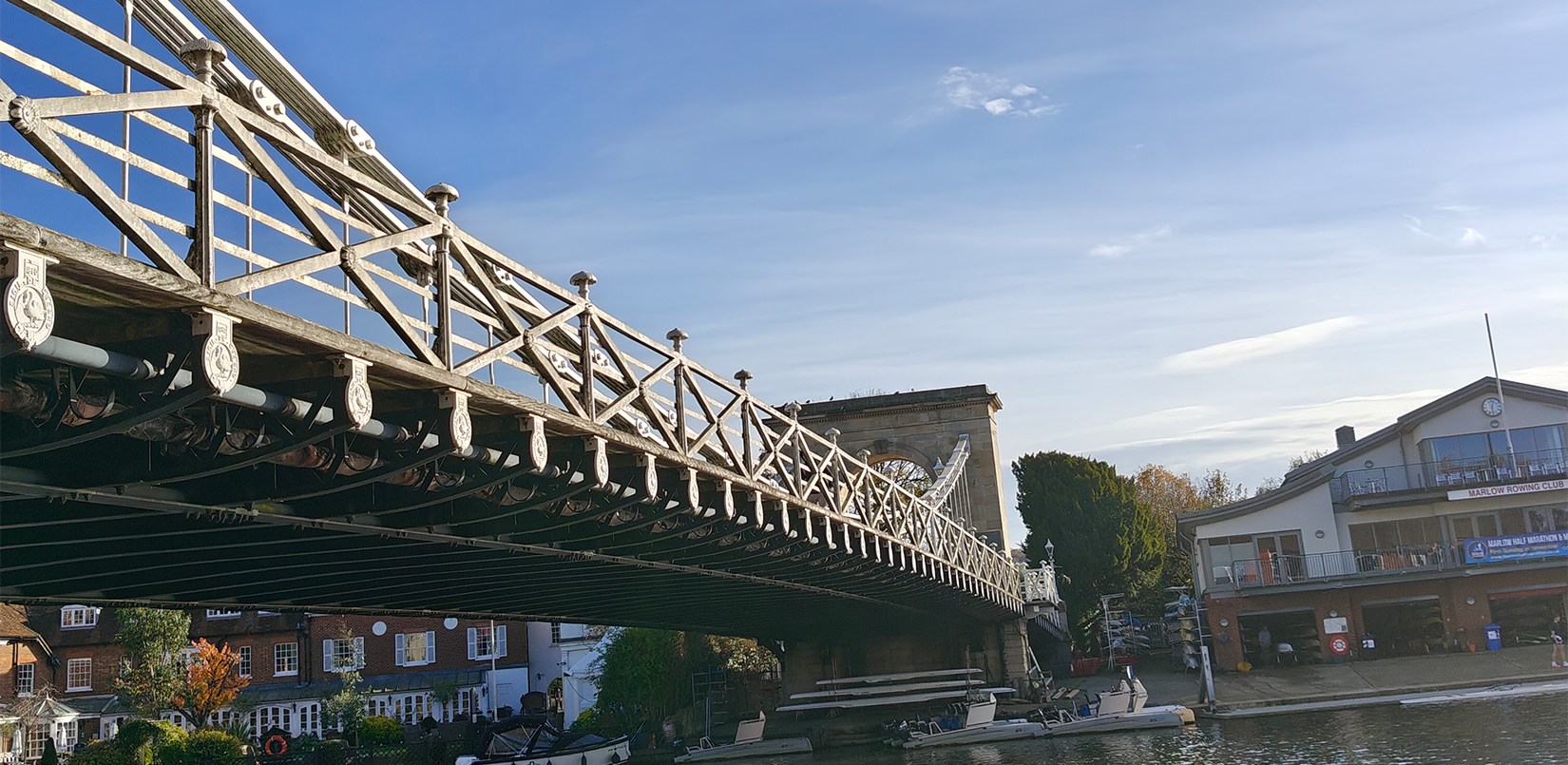
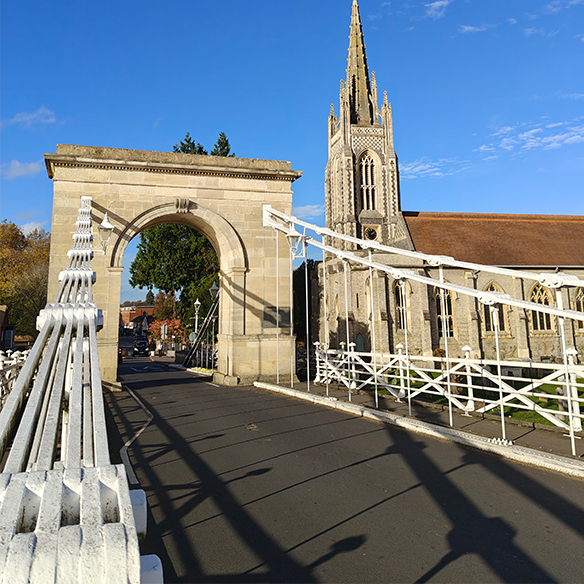
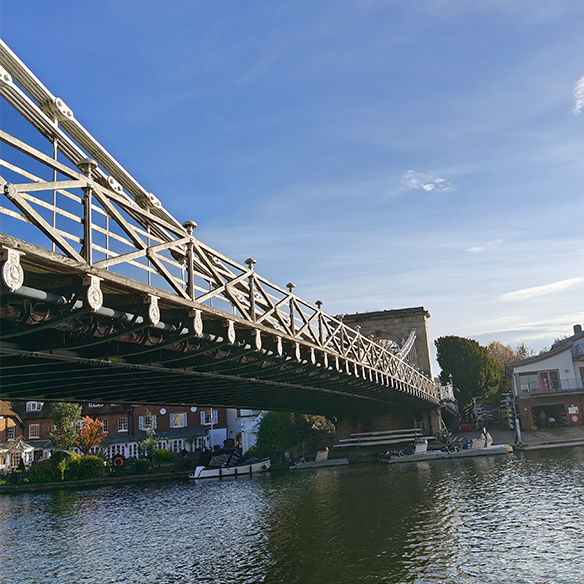
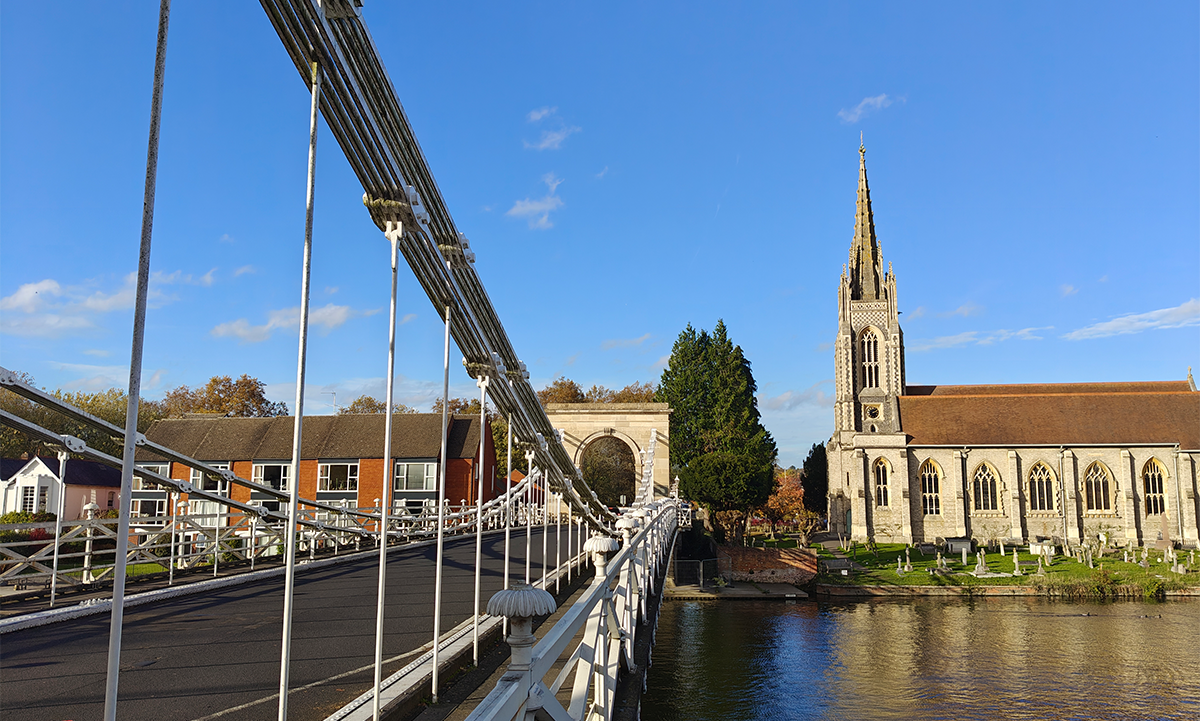
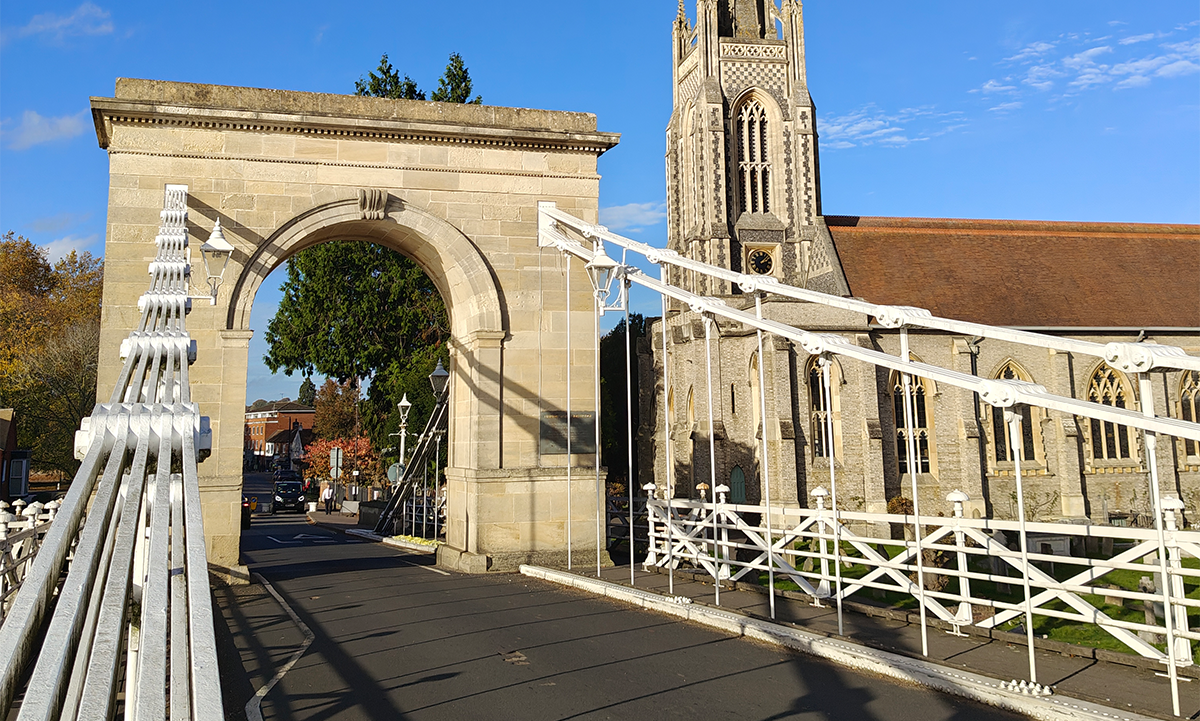
Designed by Wiliam Tierney Clark and originally opened in 1832, Marlow Bridge presents an iconic landmark spanning the River Thames in Buckinghamshire. Due to its age and historic significance, the structure requires ongoing specialist maintenance and is currently undergoing restoration, heritage repairs and redecoration, expected to complete later this year.

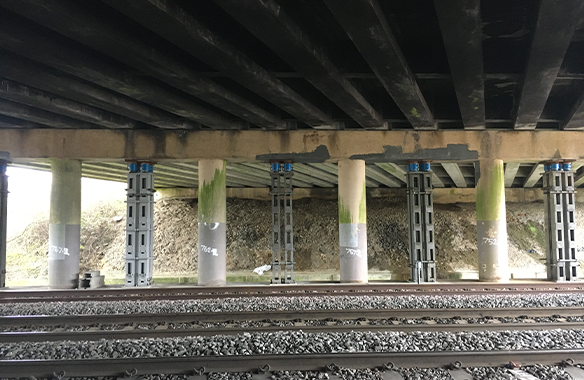
To carry out the work safely and without any damage to the ageing metalwork, a bespoke jacking and support solution was required to lower the structure by just two millimetres, ensuring that the hinged bearings could be released and replaced with modern equivalents. While projects of this nature would usually involve jacking up the bridge deck to allow access to the bearings underneath, Marlow Bridge’s listed status and suspension structure meant that a different approach had to be taken. The bridge deck was lowered and clamped onto a temporary propping scheme, which was assembled on piled foundations driven into the embankment on either side of the river.

Our solution

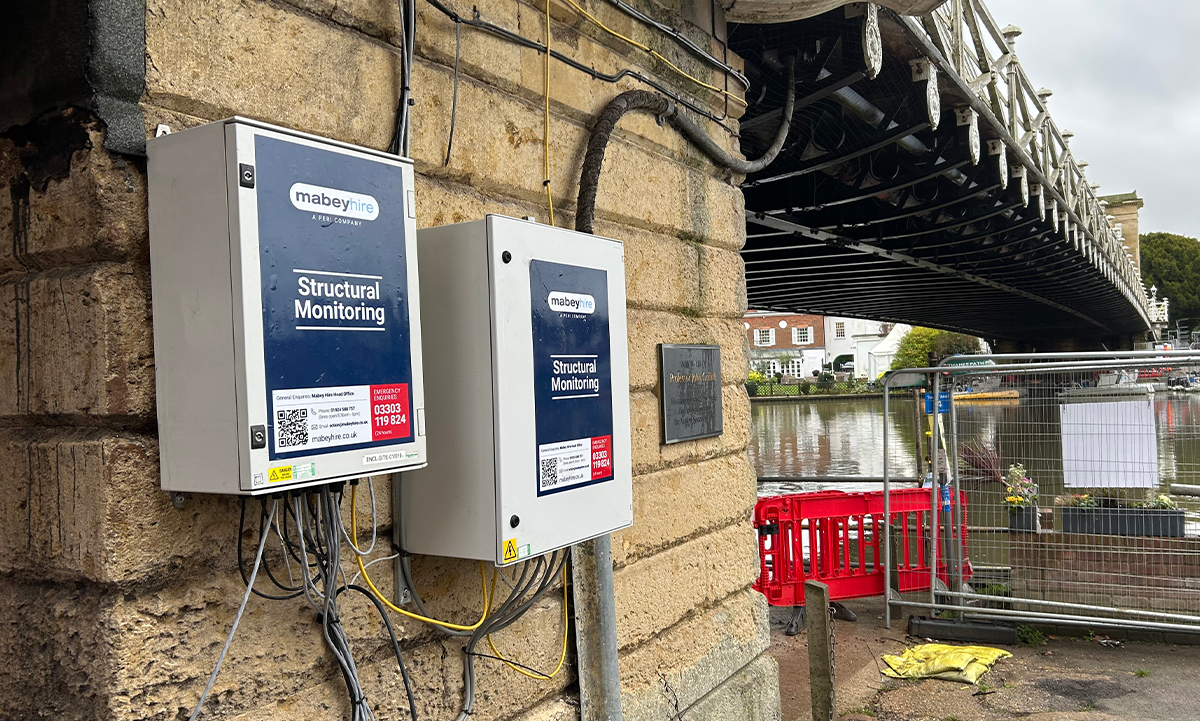
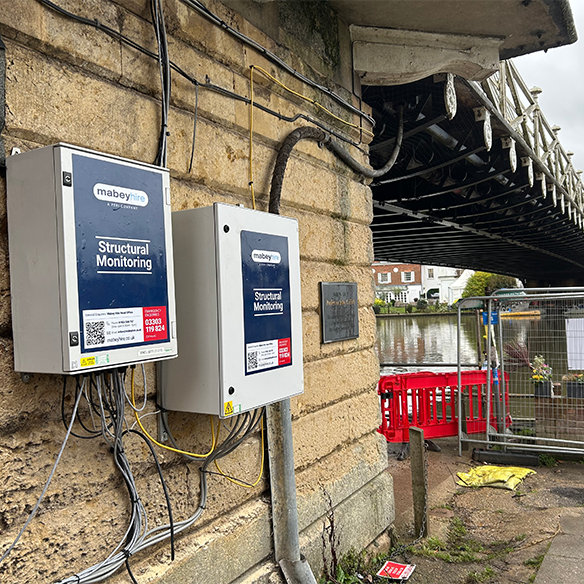
We supplied the required Mass 50 and Mass 25 propping system grillages, beams and other components, including two sets of 75 tonne hydraulic jacks, plus 50 tonne hollow rams to lower the deck. While our dedicated monitoring team provided an array of sensors and data loggers to measure multi-directional movement, with the capability to send automatic alerts via our Insite platform.

Speaking about the project, Mabey Hire’s Monitoring Manager, Dave Bradshaw, commented: “Typically on complex projects, we will be liaising with the client and consultant for up to a year before work starts and this was a very complex proposition. We had been awarded the contract on the basis we could provide the full service offering of propping, jacking and monitoring, while the client also had experience working with us previously.”

The bearings on the bridge piers and abutments were of an unusual design, with a pin joint, and were failing. The subsequent repair works involved a carefully phased approach where the bridge deck was preloaded to bring it down 2mm, allowing for the pins to be released so the contractor could fit completely new bearings.

Dave continued: “There were three key elements to the construction monitoring. First, baseline monitoring was carried out during the repair works to understand how the bridge normally behaves. This was followed by fatigue monitoring after the works, and non‑destructive testing (NDT), which allows the condition of the structure to be checked without causing any damage.

“During the initial stage, small changes in movement and loading were measured on the hangers and chains that support the bridge. These readings provided a reference point, allowing engineers to safely compare how the bridge responded during the jacking and bearing replacement.

“A wide range of monitoring equipment was installed on the bridge to track how it behaved throughout the works. Sensors were fitted to both the north and south piers, as well as to the bridge structure itself, allowing engineers to closely observe movement, loading and vibration during Phase One.

“Particular attention was paid to a Thames Water main suspended beneath the bridge. Monitoring equipment was attached to the pipe to accurately measure its position and movement along the full length of the bridge, ensuring it remained stable at all times. Additional sensors tracked vibration and movement of both the pipe and the bridge deck, giving engineers confidence that the works were being carried out safely and without risk to the structure or surrounding services.”

We supplied multiple high-frequency data loggers to the North and South piers, along with a total of 112 strain gauges for phase one. In addition to horizontal inclinometers, triaxial vibration sensors and linear displacement transducers.

The monitoring team began installation of its equipment early in the new year just as snow and ice made conditions tricky, leading to Mabey Hire installing special thermometers so that movements could be checked against ambient temperature and video footage. Piling was duly able to commence once the baseline figures had been established and load cells were fitted to the temporary support frames, so that both tension and compression loads relating to vehicle movements could be constantly checked.

Dave Bradshaw added: “Once bearing replacement work on the abutments was completed, we moved our equipment over to the piers. Then, once the construction phase is complete, we will install a further 44 strain gauges (small sensors used to measure tiny movements in the steel) for a four-week period to monitor high-speed fatigue in the structure as the metal stretches and compresses, related back to the CCTV cameras. Finaly we will carry out the NDT testing, with metal particle measurements, over several nightshifts, employing ultrasonic inspection and dye pen marking to highlight any defects on the steel.”

Balfour Beatty Living Places Project Manager, Dean Murray, commented: “We began with ground investigations to inform the design and assess ground strength before piling and pile-cap construction could start, ensuring the temporary works had a suitable base.”

“This has been a particularly complex project because of the bridge’s age, its unusual bearing design and earlier works to the pin bearings, carried out around 15 years ago, which had already begun to fail. The Type P bearings on the pier, last replaced in 1965, were also due for renewal. Despite the reduced weight limit, the structure was showing significant movement, so a more robust design has been developed for the new bearings now being installed. The removed bearings were fixed with shear keys, Macalloy pre-tensioned bars and Hilti bolts, all of which had to be removed by diamond core drilling to minimise damage to the bridge.

“Overall, it has been a huge collaborative effort. Meanwhile the new backing plates and bearings we are installing are expected to last at least another 60 years.”
Contact Phone Number

Give us a call

For all project specific design and technical enquiries, please contact your local service team.

Send us an email

If you want to talk to us about your project, send us an email and a brief outline of how we can help and we’ll be in touch.

[email protected]

Get updates
on our latest news,
solutions and projects