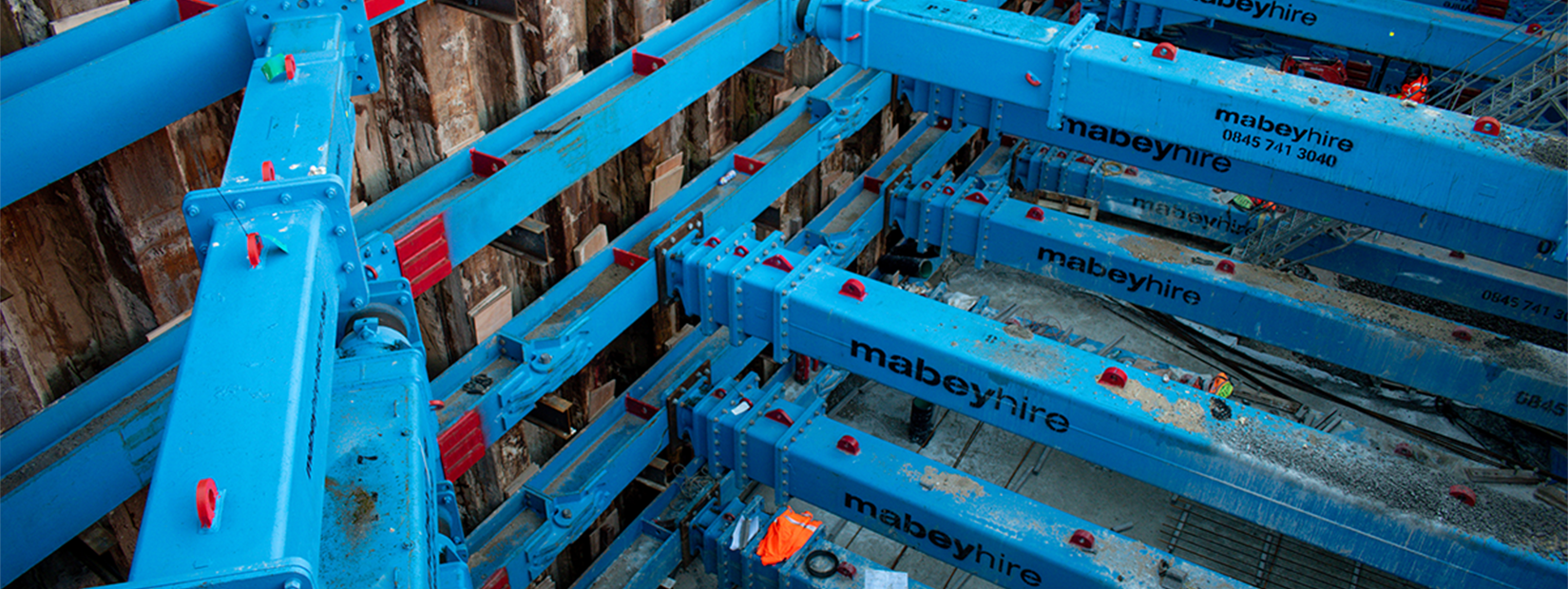
As global temperatures continue to rise and heatwaves are becoming a common feature of UK summers, we explore how extreme temperatures can affect more than just our quality of sleep. Read on as Elliott Griffin, Senior Design Engineer, and Dave Bradshaw, Monitoring Manager, look into the impact on groundworks props, including how to mitigate thermal expansion and the value of monitoring systems in helping teams take proactive action.
It’s no secret that UK weather is becoming warmer and wetter, with extreme weather events – from heatwaves to winter storms and flooding – becoming more frequent and intense. Already, the summer of 2026 has broken records, with a new maximum temperature record for June and not one but two official heatwaves arriving in quick succession. Looking at the history books, the last decade has been warmer than any previous decade on record.*
As well as the sleepless nights, associated health risks and everyday tasks becoming more difficult, it’s also important to consider how extreme temperatures can affect temporary works equipment out on site – whether that’s props used to shore up a small trench run, a major city-centre basement excavation or retention of a building façade.
Already, temporary works engineers will account for expected temperature fluctuations in their design. In typical basement propping applications, engineers will allow for additional load within the props to account for the expansion of the steel in the heat. As props increase in size, this can increase significantly, with the loads caused by temperature changes accounting for up to 50% of the prop design in some cases. The temperature fluctuations considered in the design depend on the time of year and how long the equipment will be on site for. For example, if the equipment is only going to be in-situ during winter, this will carry different design considerations than a two-year long hire period across multiple seasons.
What happens in extreme heat?
When faced with consistently extreme temperatures, the design capacity of steel props and struts can be affected. As we all know, metal will expand and contract as it heats and cools – a process called thermal expansion. As a prop is heated and the surrounding ground excavation (in the case of groundworks) or permanent structure limits its expansion, this results in the prop loads increasing. In extreme cases, this can lead to a deflection or movement in the prop or structure, or alternatively the load being transferred elsewhere.
Monitoring insight
So, the question faced by engineers across the UK as we look ahead to hotter summers is how we can manage the risk presented by these extreme temperatures? Of course, we can design with larger temperature fluctuations in mind – however, this can result in potentially over-engineering a temporary works scheme, at higher costs. There are also other factors to consider, such as in the case of deep ground excavations where you may have multiple levels of bracing, with the kit’s exposure to sunlight differing depending on the depth.
While employing intelligent monitoring solutions may not solve climate change, it can provide valuable insight into a site and its temporary works equipment, helping contractors to better manage risk and take proactive steps at an earlier stage.
Take LIVEpin monitoring as an example. A load-monitoring pin designed to fit seamlessly within our propping equipment, it measures the axial load applied to the system while simultaneously monitoring temperature. By establishing a baseline, site teams can then easily determine if the props are experiencing increased loads. While structural monitoring sensors can be installed to detect any movement, deflection or vibration in the ground or structure.
Used in conjunction, a careful balance between the two can provide continuous, accurate and real-time data, ensuring full visibility of changing site conditions. Systems can also issue alerts whenever pre-set thresholds are exceeded, enabling a prompt response and reactive action to be taken, such as covering the props, or watering them down to limit the metal expansion. For example, a recent London basement propping job experienced 40ºC heat and teams were able to monitor the temperature’s impact on the temporary supports, with red alerts flagging the need to take action.
Mechanical vs hydraulic
In addition to highlighting the case for monitoring technologies, designing for heatwave conditions also emphasises the value of hydraulic props versus traditional mechanical props. The use of our 250t hydraulic rams within the prop, for example, can reduce the impact of the thermal expansion on the props by up to 60%. With integrated control and monitoring, they ensure accuracy, reduce risk and keep critical work moving efficiently.
As well as a dedicated monitoring team, we have one of the largest fleets of hydraulic props in the UK. Combined with over 60 years of engineering experience, we have the expertise needed to ensure projects continue to be delivered safely and efficiently out on site, even as temperatures continue to rise.